All posts by pamrevie

Early Childhood / Early Childhood Education

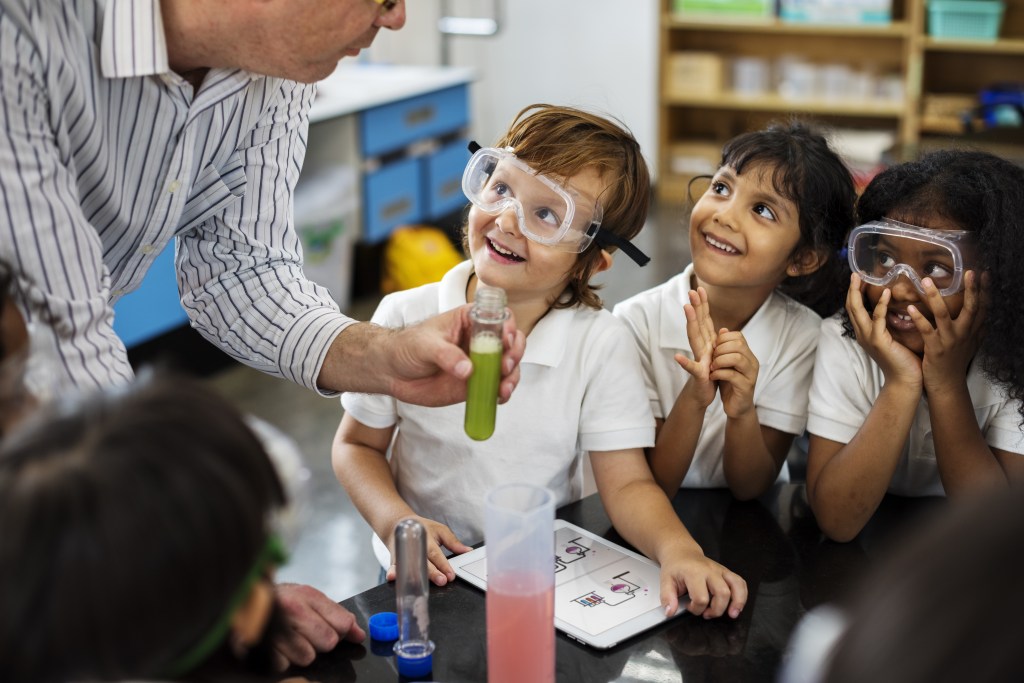
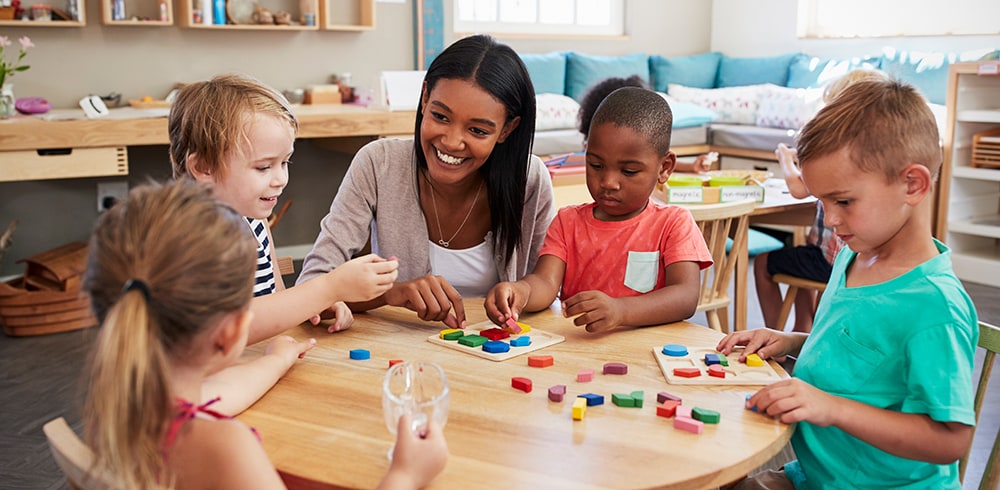
This systematic review of research on early childhood programs seeks to identify effective approaches capable of improving literacy and language outcomes for preschoolers. It applies consistent standards to determine the strength of evidence supporting a variety of approaches, which fell into two main categories: balanced approaches, which include phonemic awareness, phonics, and other skills along with child-initiated activities, and developmental-constructivist approaches that focus on child-initiated activities with little direct teaching of early literacy skills. Inclusion criteria included use of randomized or matched control groups, evidence of initial equality, a minimum study duration of 12 weeks, and valid measures of literacy and language. Thirty-two studies evaluating 22 programs found that early childhood programs that have a balance of skill-focused and child-initiated activities programs had significant evidence of positive literacy and language outcomes at the end of preschool and on kindergarten follow-up measures. Effects were smaller and not statistically significant for developmental-constructivist programs.

Technical Report

Published Report

Chambers, B., Cheung, A., & Slavin, R. (2016). Literacy and language outcomes of balanced and developmental-constructivist approaches to early childhood education: A systematic review.Educational Research Review 18, 88-111.
K-12 Meta-Analysis (Borman)

Which comprehensive school reform programs have been proven to help elementary and secondary students achieve? To find out, this review summarizes evidence on comprehensive school reform (CSR) models in elementary and secondary schools. Comprehensive school reform models are programs used schoolwide to improve student achievement. They typically include the following elements:

  • Innovative approaches to instruction and curriculum used in many subjects throughout the school
  • Extensive, ongoing professional development, and coaches or facilitators in the building to help manage the reform process
  • Measurable goals and benchmarks for student achievement
  • Emphasis on parent and community involvement

CSR models are developed and supported by national organizations, mostly nonprofits, that provide professional development, materials, and support to networks of schools.

Published Report

Science / Secondary

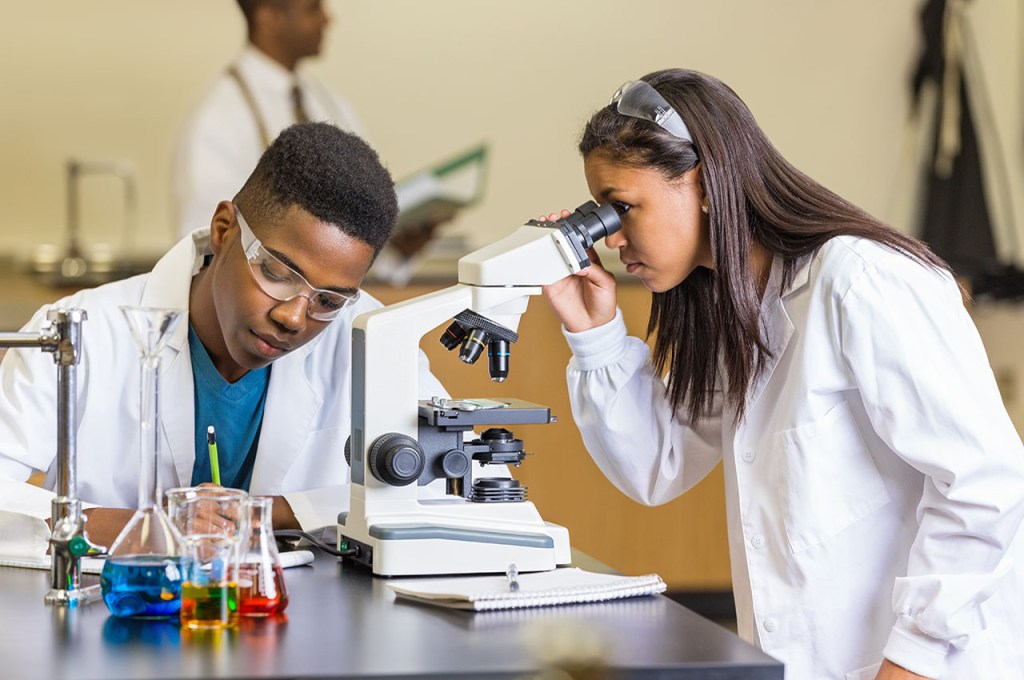
High school students using microscope, examining slides in science class

This article reports a systematic review of research on science programs in grades 6-12. Twenty-one studies met inclusion criteria including use of randomized or matched assignment to conditions, measures that assess content emphasized equally in experimental and control groups, and a duration of at least 12 weeks. Programs fell into four categories. Instructional process programs (ES=+0.24) and technology programs (ES=+0.47) had positive sample-size weighted mean effect sizes, while use of science kits (ES=+0.05) and innovative textbooks (ES=+0.10) had much lower effects. Outcomes support the use of programs with a strong focus on professional development, technology, and support for teaching, rather than materials-focused innovations.

Technical Report

Published Report

Cheung, A., Slavin, R.E., Kim, E., & Lake, C. (2016). Effective secondary science programs: A best-evidence synthesis. Journal of Research on Science Teaching, 54 (1), 58-81. Doi: 10.1002/tea.21338

SCIENCE / ELEMENTARY

Which science programs have been proven to help elementary students to succeed? To find out, this review summarizes evidence on three types of programs designed to improve the science achievement of students in grades K–6:

  • Inquiry-oriented programs without science kits, such as Increasing Conceptual Challenge, Science IDEAS, and Collaborative Concept Mapping. These programs help teachers learn and use generic processes, such as cooperative learning, concept development, and science-reading integration, in their daily science teaching.
  • Inquiry-oriented programs with science kits, such as Insights, FOSS, STC, SCALE, and Teaching SMART. The theory of action in science kit programs is that implementing hands-on activities helps to build deep learning about the scientific process and core concepts of elementary science.
  • Technology programs, such as BrainPOP, The Voyage of the Mimi, and web-based labs. Technologies utilized in these approaches include computer-assisted instruction and class-focused technology (such as video and interactive whiteboard technologies).

The evidence from studies that met the review’s inclusion criteria supports a view that improving outcomes in elementary science depends on improving teachers’ skills in presenting lessons, engaging and motivating students, and integrating science and reading. Technology applications that help teachers teach more compelling lessons and that use video to reinforce lessons also have promise.

Technical Report

Published Report

Slavin, R. E., Lake, C., Hanley, P., & Thurston, A. (2014). Experimental evaluations of elementary science programs: A best-evidence synthesis. Journal of Research in  Science Teaching, 51 (7), 870-901.

Writing / Grades 2-12

This paper reviews research on outcomes of writing programs for students in grades 2 to 12. Studies had to meet rigorous standards of research including use of randomized or wellmatched control groups, measures independent of the program developers, researchers, and teachers, and adequate sample size and duration. Fourteen studies of 12 programs met the standards. Twelve (86%) were randomized, two matched. Programs were divided into three categories. Student achievement effects on writing were positive on average in all categories (Effect Size=+0.18), with similar outcomes for writing programs focused on the writing process (ES=+0.17), those using cooperative learning (ES=+0.16), and those focusing on interactions between reading and writing (ES=+0.19).

Technical Report

Published Report

Slavin, R.E., Lake, C., Inns, A., Baye, A., Dachet, D., & Haslam, J. (2019). A quantitative synthesis of research on writing approaches in grades 2 to 12. London: Education Endowment Foundation.

READING / EFFECTIVENESS OF TECHNOLOGY

The Center for Research and Reform in Education has completed reviews of educational technology and reading achievement, focusing on the effects of technology use on reading achievement in K-12 classrooms, and also on reading outcomes for struggling readers. The reviews can be accessed from the following links:

Effects of Technology Applications on Reading Achievement in K-12 Classrooms

Technical Report

Published Report

Cheung, A., & Slavin, R.E. (2012). How features of educational technology programs affect student reading outcomes: A meta-analysis. Educational Research Review, 7 (3), 198-215. Doi:10.1016/j.edurev.2012.05.002

Effects of Technology Applications on Reading Outcomes for Struggling Readers

Technical Report

Published Report

Cheung, A., & Slavin, R. E. (2013). Effects of educational technology applications on reading outcomes for struggling readers: A best-evidence synthesis. Reading Research Quarterly, 48 (3), 277-299.

Reading / Struggling Readers

This article reviews research on the outcomes of diverse reading programs on the achievement of struggling readers in elementary schools. Sixty-five studies of 51 different programs met rigorous standards. Eighty-three percent were randomized experiments and 17% quasi-experiments. Outcomes were positive for one-to-one tutoring and were positive but not as large for one-to-small group tutoring. There were no differences in outcomes between teachers and teaching assistants as tutors. Whole-class approaches (mostly cooperative learning) and whole-class/whole-school approaches incorporating tutoring for struggling readers obtained outcomes for struggling readers as large as those found for all forms of tutoring, on average, and benefitted many more students. Technology-supported adaptive instruction did not have significant positive outcomes for struggling readers, however. In agreement with previous reviews, this synthesis found that substantial impacts can be obtained for struggling readers with interventions aligned within a response to intervention network.

Technical Report

Published Report

Neitzel, A., Lake, C., Pellegrini, M., & Slavin, R. (2022). A synthesis of quantitative research on programs for struggling readers in elementary schools. Reading Research Quarterly 57 (1), 149-179. https://psycnet.apa.org/record/2021-23770-001

This article proposes a strategy to accelerate the learning of struggling learners that uses proven reading and mathematics programs to ensure student success. Based on Response to Intervention (RTI), the proposed policy, Response to Proven Intervention (RTPI), uses proven whole-school or whole-class programs as Tier 1, proven one-to-small group tutoring programs as Tier 2, and proven one-to-one tutoring as Tier 3. The criteria for “proven” are the “strong” and “moderate” evidence levels specified in the Every Student Succeeds Act (ESSA). This article lists proven reading and mathematics programs for each tier, and explains how evidence of effectiveness within an RTI framework could become central to improving outcomes for struggling learners.

Technical Report

Slavin, R., Neitzel, A., Pellegrini, M., & Lake, C. (2019). Response to proven intervention (RTPI): Enabling struggling learners. Center for Research and Reform in Education, Johns Hopkins University.

READING / ENGLISH LANGUAGE LEARNERS

The Center for Research and Reform in Education has completed a review of reading programs for English language learners, which can be accessed from the link below.

Technical Report

Published Report

Cheung, A., & Slavin, R. E. (2012). Effective reading programs for Spanish-dominant English language learners (ELLs) in the elementary grades.Review of Educational Research, 82 (4), 351-395.

READING / SECONDARY

Recent initiatives in the U.S. and U.K. have added greatly to the amount and quality of research on the effectiveness of secondary reading programs, especially programs for struggling readers. This review of the experimental research on secondary reading programs focuses on 69 studies that used random assignment (n=62) or high-quality quasi-experiments (n=7) to evaluate outcomes of 51 programs on widely accepted measures of reading. Categories of programs using one-to-one and small-group tutoring, cooperative learning, whole-school approaches including organizational reforms such as teacher teams, and writing-focused approaches showed positive outcomes. Individual approaches in a few other categories also showed positive impacts. These include programs emphasizing social studies/science, structured strategies, and personalized and group/personalization rotation approaches for struggling readers. Programs that provide a daily extra period of reading and those utilizing technology were no more effective, on average, than programs that did not provide these resources. The findings suggest that secondary readers benefit more from socially and cognitively engaging instruction than from additional reading periods or technology.

Technical Report

Published Report

Baye, A., Lake, C., Inns, A. & Slavin, R. E. (2019). Effective reading programs for secondary students. Reading Research Quarterly, 54 (2), 133-166.